
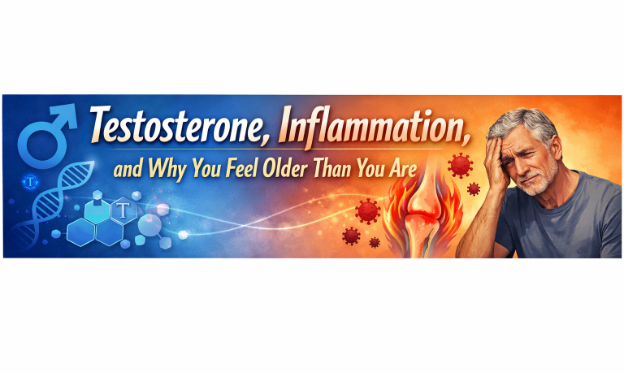
When inflammation meets hormones
Many men feel achy, tired and older than their years. Chronic inflammation can drive this feeling by lowering testosterone and speeding up aging. Studies show that testosterone deficiency is associated with metabolic disorders and that inflammation suppresses hormone production. Pro‑inflammatory cytokines such as TNF‑α, IL‑6 and IL‑1β suppress the hypothalamic release of gonadotropin‑releasing hormone and luteinizing hormone, leading to decreased testosterone.
The vicious cycle
Low testosterone promotes visceral fat and increases lipoprotein lipase activity, which fuels more fat storage. Visceral fat produces inflammatory cytokines that further suppress testosterone. This cycle of inflammation and hormone imbalance leads to fatigue, joint pain and “old man” feelings even in middle age.
Composite case: Greg’s inflammation story
Greg, 48, developed joint pain, belly fat and brain fog. Blood tests revealed low testosterone and high inflammatory markers. A functional practitioner recommended anti‑inflammatory nutrition, strength training, stress reduction and targeted hormone therapy. As his inflammation decreased, his testosterone and energy improved, and his joints felt younger.
Different approaches
Conventional care might treat joint pain with anti‑inflammatory drugs without looking at hormones. Functional medicine addresses the root cause by reducing inflammation and improving hormonal balance. This may include diet changes (like increasing omega‑3 fats and antioxidants), stress management and, if necessary, collaboration with clinics that specialize in testosterone replacement therapy. Breaking the inflammation–testosterone cycle can help you feel younger and more resilient.
Conclusion
Feeling older than your age may be a sign of inflammation and low testosterone. Reducing inflammatory triggers and restoring hormone balance can help you regain vitality.